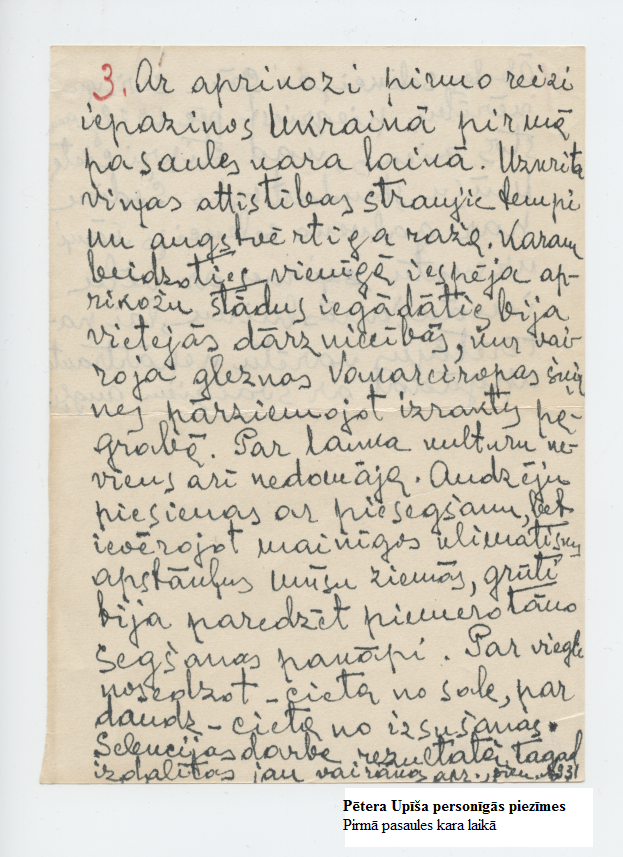
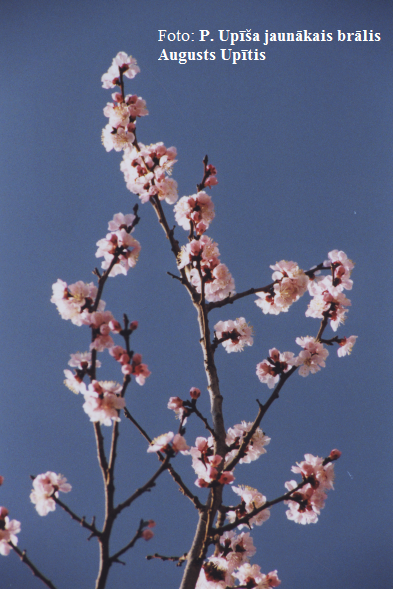
The beginnings of apricot cultivation in Latvia
Any crop that enters a “foreign climate” needs a relatively long time to adapt to new conditions. This fully applies to apricots, for which Latvia is currently the furthest northern limit of cultivation. Much has already been achieved as a result of the persistent work of breeders: we can grow not only edible, but also very tasty apricot fruits, but this does not come easily.
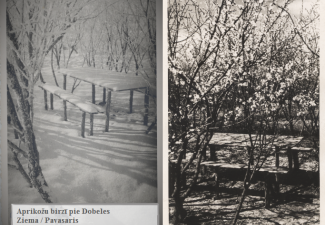
Apricot breeding in Latvia can be conditionally divided into several stages. The first stage – until approximately 1945 – was the cultivation of southern forms near the walls of buildings; the second stage lasted from 1946 to the harsh winter of 1978/79. During this time, apricot breeding was carried out by two breeders – Viktors Vārna in Riga at the Botanical Garden of the University of Latvia and Pēteris Upītis – in Dobele.
P. Upītis obtained breeding material mainly from Central Asia and the Caucasus Mountains from the so-called žerdels, because he found that they have higher frost resistance. The first serious test for P. Upītis' apricot seedlings was the winter of 1955/1956, when even apple trees froze in Latvian gardens. Out of several tens of thousands, only a few survived. Thousands of seedlings also died in later winters, while the most resistant ones with high-quality fruits were selected.